A caregiver daily log records the date, time, what you observed or were told, any action taken and what needs follow-up. Keep the care recipient’s health record separate from your own wellbeing journal.
What belongs in a caregiver daily log?
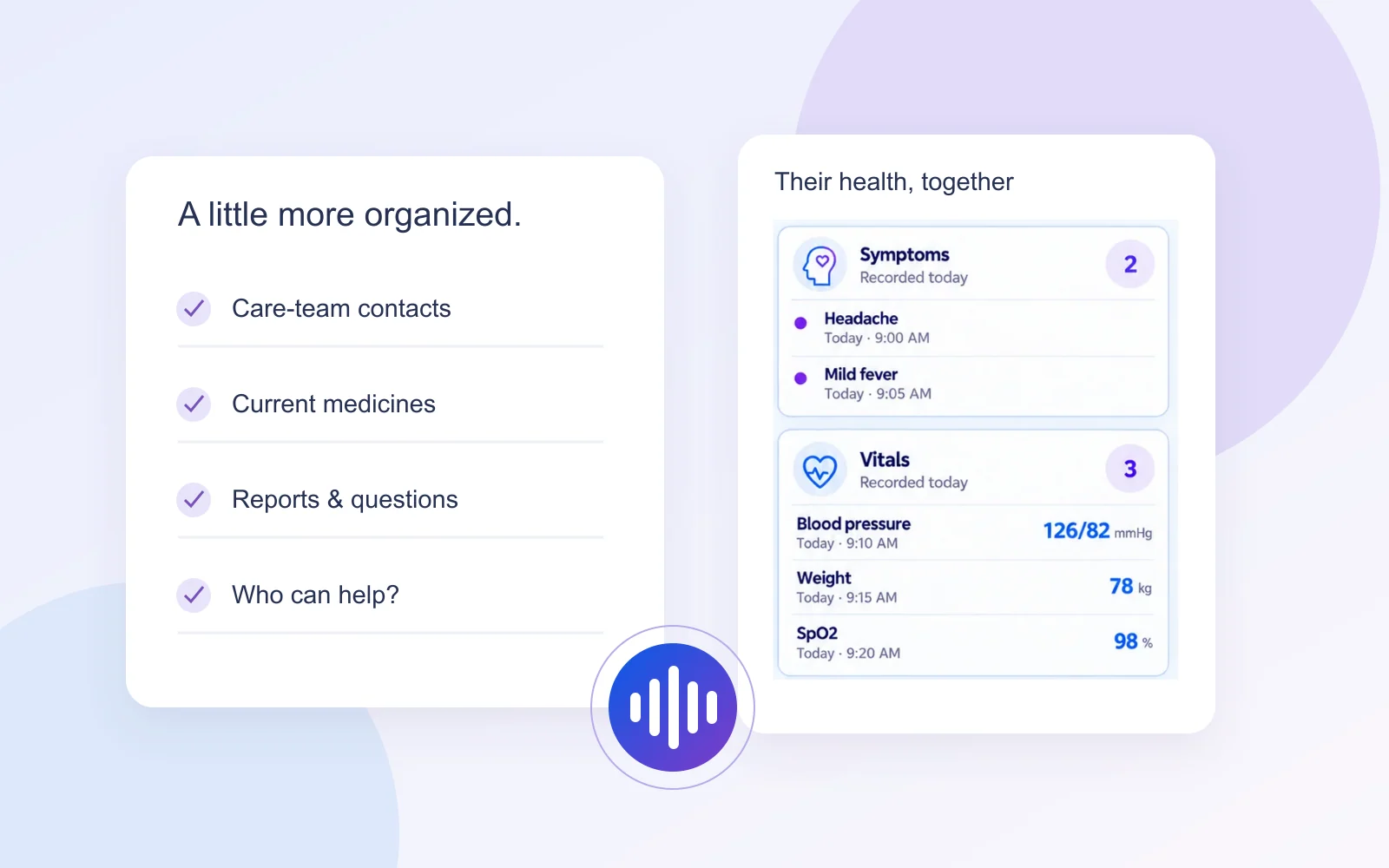
Record details that help the next person understand the day: a reported symptom, a measurement taken as instructed, an appointment question, or a change in the usual routine. Identify who made the entry and distinguish what you saw from what someone told you.
A medication log needs particular care. Keep the exact name, prescribed dose and schedule in a current medication list. When recording a dose, note whether it was taken, declined or is still unconfirmed; a reminder is not proof it was taken. MedlinePlus · Caregiving: medication management recommends keeping medicines, supplements and instructions current and checking questions with a clinician or pharmacist.
A daily caregiving log can be paper or digital. The useful part is consistency: the same fields, readable dates and one place to find the latest information. Caregiver Action Network · Patient file checklist is a helpful companion for the broader care file.
Print your daily caregiving log
Use one sheet per day or care handoff. Leave a field blank when you do not know the answer, and label information that still needs checking. Store completed logs somewhere only the appropriate people can access.
Curex360 · Family caregiver worksheet
Caregiver daily log
For: ____________________ Date: ____________________
| Time / author | Observation or reported dose | Action / follow-up |
|---|---|---|
Keep completed copies private. Review health questions with the care team.
Useful prompts: What changed? When did it happen? Was a dose actually confirmed? What did the care team advise? What should the next caregiver know? A log is not a substitute for contacting a professional when a new concern needs attention.
A filled example: facts before interpretation
Tuesday, 8:30 a.m. · Alex
Mom said she slept poorly and felt more tired than usual. She ate breakfast. I wrote down her exact description and added a question about sleep for her appointment. Evening caregiver: please note whether she reports the same concern.
This entry describes an observation and a next step. It does not label the tiredness as a diagnosis or suggest changing a medicine. If someone else supplied the information, write “Mom reported…” rather than recording it as something you observed.
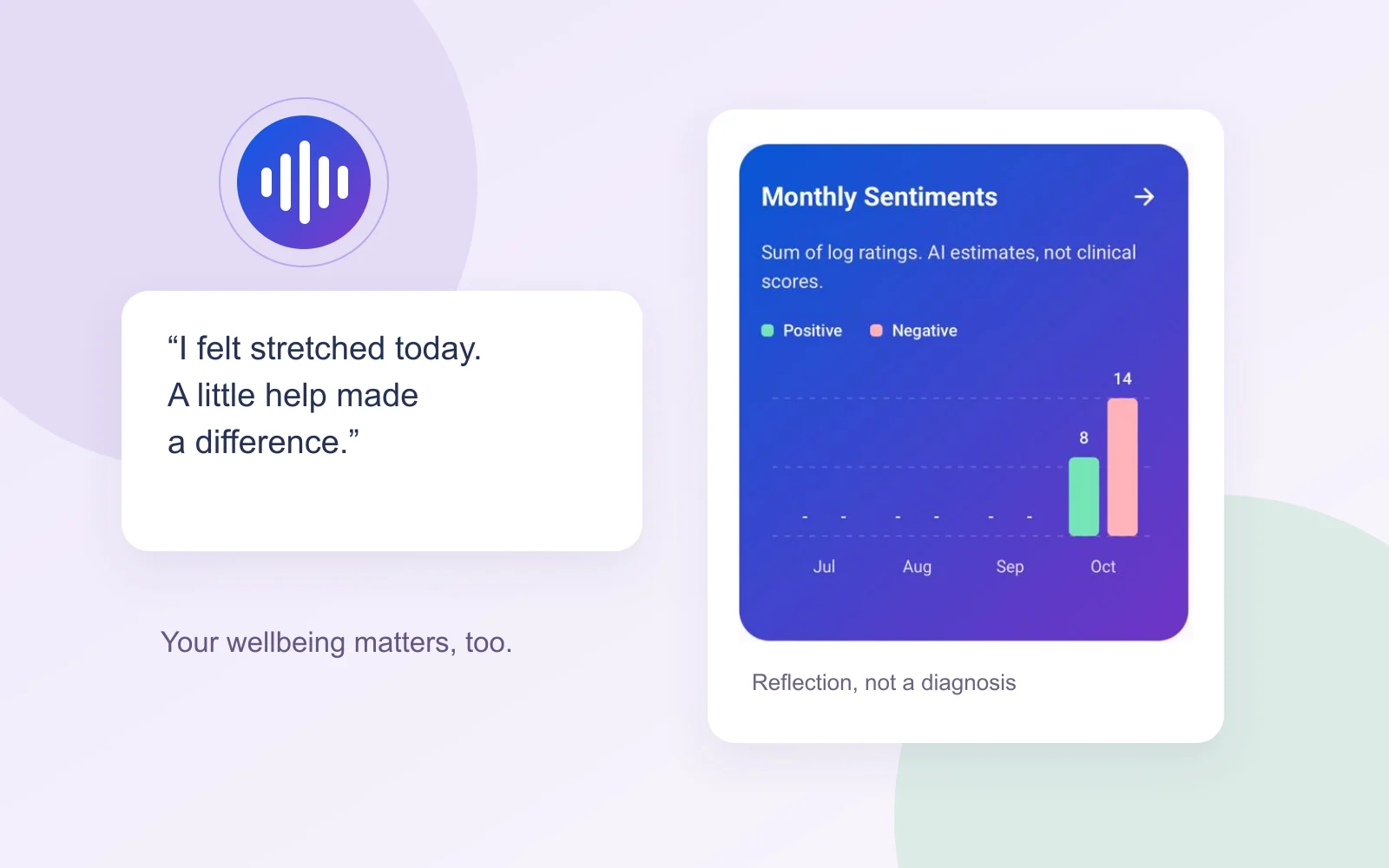
A separate caregiver journal might say, “I felt stretched this morning and need help with tomorrow’s ride.” Keep that in your own record, so the parent’s timeline does not accidentally become a record of the caregiver’s feelings.
Speak, review, then save
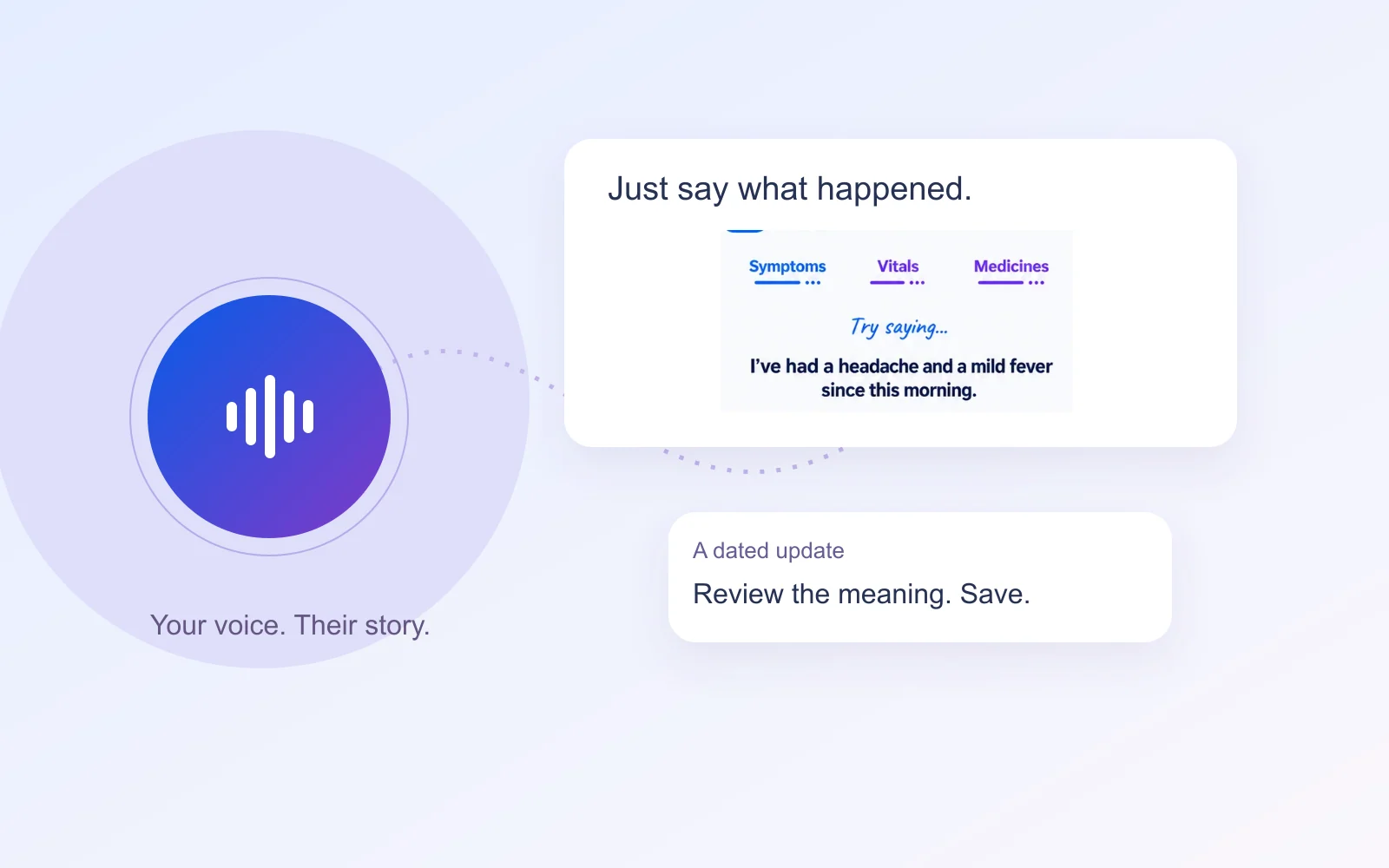
- Choose the right profile. Check whose record you are updating before you speak.
- Say the details naturally. Include the time, what happened and any uncertainty. You can speak in your language.
- Review the result. Correct names, dates, units and meaning. For medicines, confirm the details in the form before saving.
- Keep the original context. Review dated entries before sharing a summary at an appointment.
Curex360’s symptom tracker organizes physical symptoms, while Health Log captures reflections about mood, stress and wellbeing. AI can misunderstand speech or tone. Its summaries and sentiment charts are organizational aids, not clinical assessments.
Common questions
Is a caregiver daily log the same as a medication list?
No. A medication list records the current prescribed regimen. A daily log records observations and what happened at a particular time. Keep both current and ask a clinician or pharmacist about medication discrepancies.
Can I print this caregiver log template for free?
Yes. Use “Print or save as PDF” above the worksheet. The printable sheet is blank; you do not need to enter personal health information on this website.
Sources & further reading
Educational guidance from Curex360. Medical concerns and medication decisions belong with a qualified healthcare professional.
Sources checked November 3, 2026. External organizations do not endorse Curex360.