Start with your parent’s preferences. Build one current care file, agree who handles each routine, and keep a short list of questions for the next appointment. Review the plan when needs change.
Start with a conversation, not a folder
A new caregiving role can arrive gradually or after a hospital visit. Before collecting paperwork, ask your parent what they want help with, what they prefer to keep private, and which routines matter most. Include them in decisions as far as possible. Being organized should support their choices.
Write down the immediate needs: meals, transport, appointments, medicines, or help at home. Separate what must happen today from tasks that can wait. The NIH MedlinePlus Magazine · Caregiving 101 guide recommends discussing needs, organizing information and finding practical help rather than trying to do everything alone.
Your caring for aging parents checklist
- One contact list. Primary clinician, specialists, pharmacy, a nearby trusted person and the family contact for updates.
- A current medication list. Names, prescribed doses, timing, allergies, supplements and the date the list was checked. Ask the pharmacist about discrepancies.
- Health records together. Recent reports, discharge instructions, conditions, prior procedures and questions that still need an answer.
- A workable weekly routine. Appointments, rides, groceries, meals and any help with everyday activities. Name a backup for essential tasks.
- A home-safety conversation. Notice lighting, loose rugs and difficult routes through the home; ask the care team about a suitable assessment.
- Permissions and preferences. Agree who may receive updates. Ask providers what authorization they need before sharing records or discussing care.
- Time for the caregiver. Include breaks and support in the plan, not just tasks for the person receiving care.
This is an organizing checklist, not an assessment of whether someone can live safely alone. For more planning tools, use the National Institute on Aging · Caregiver worksheets.
Make the next seven days concrete
A care plan becomes useful when each task has a person and a next step. Use this blank worksheet for a family conversation. Start with the few routines that matter this week; a small, current plan is easier to maintain than a complete but outdated one.
Curex360 · Family caregiver worksheet
Our first-week care plan
For: ____________________ Date: ____________________
| Need | Person + backup | Next step / date |
|---|---|---|
| Medication list | ||
| Appointments / transport | ||
| Meals / home support | ||
| Records and questions | ||
| Caregiver break |
Keep completed copies private. Review health questions with the care team.
Review the plan after a new prescription, a discharge, a change in support or an appointment. Confirm changes with the relevant clinician rather than relying on a family message thread.
Keep family updates easy to find
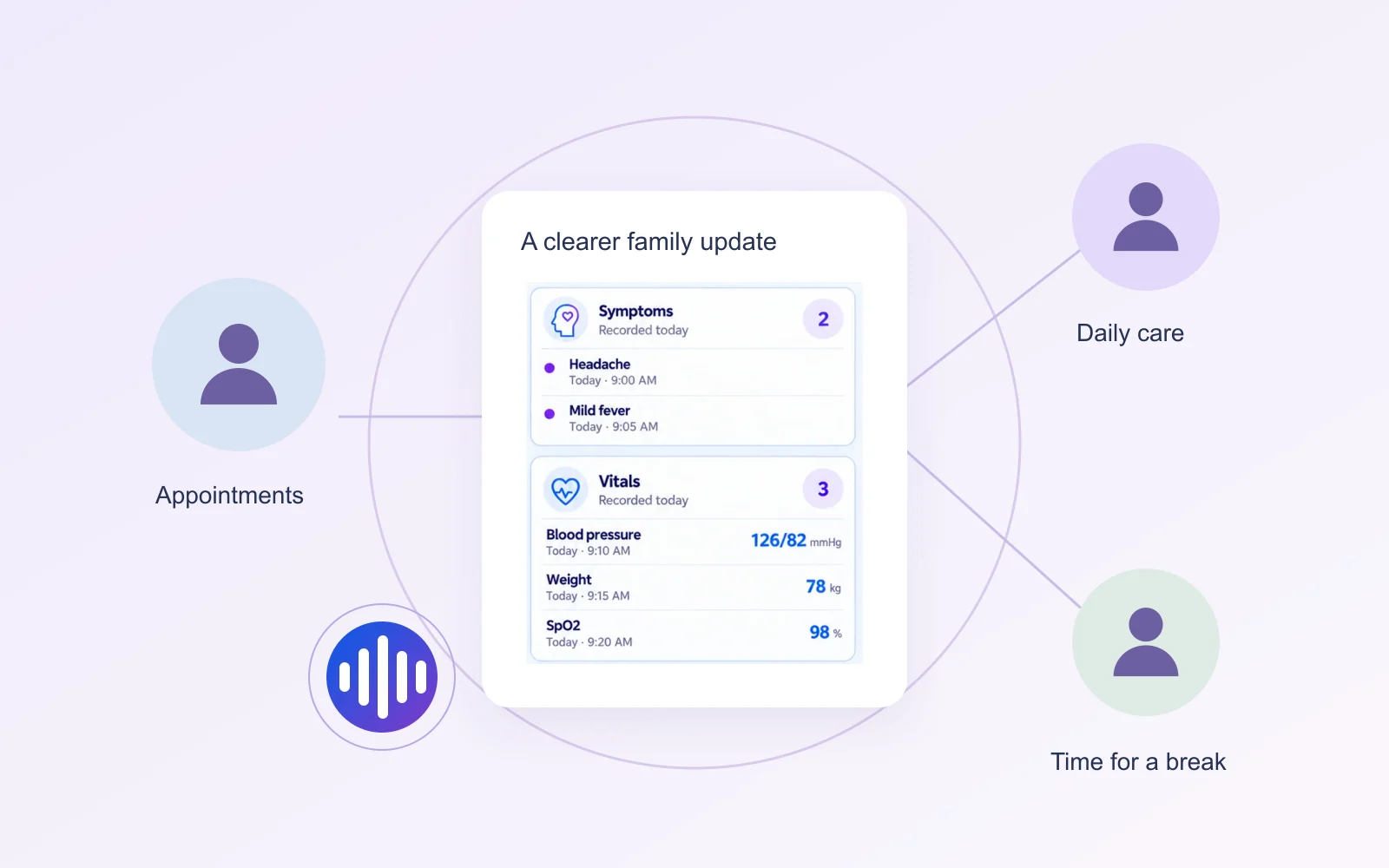
A shared update works best when it says what changed, when it happened and what needs follow-up. “Dad felt dizzy at 9 a.m.; we wrote down his description and contacted his care team” is more useful than “Dad had a bad day.” Avoid guessing at causes.
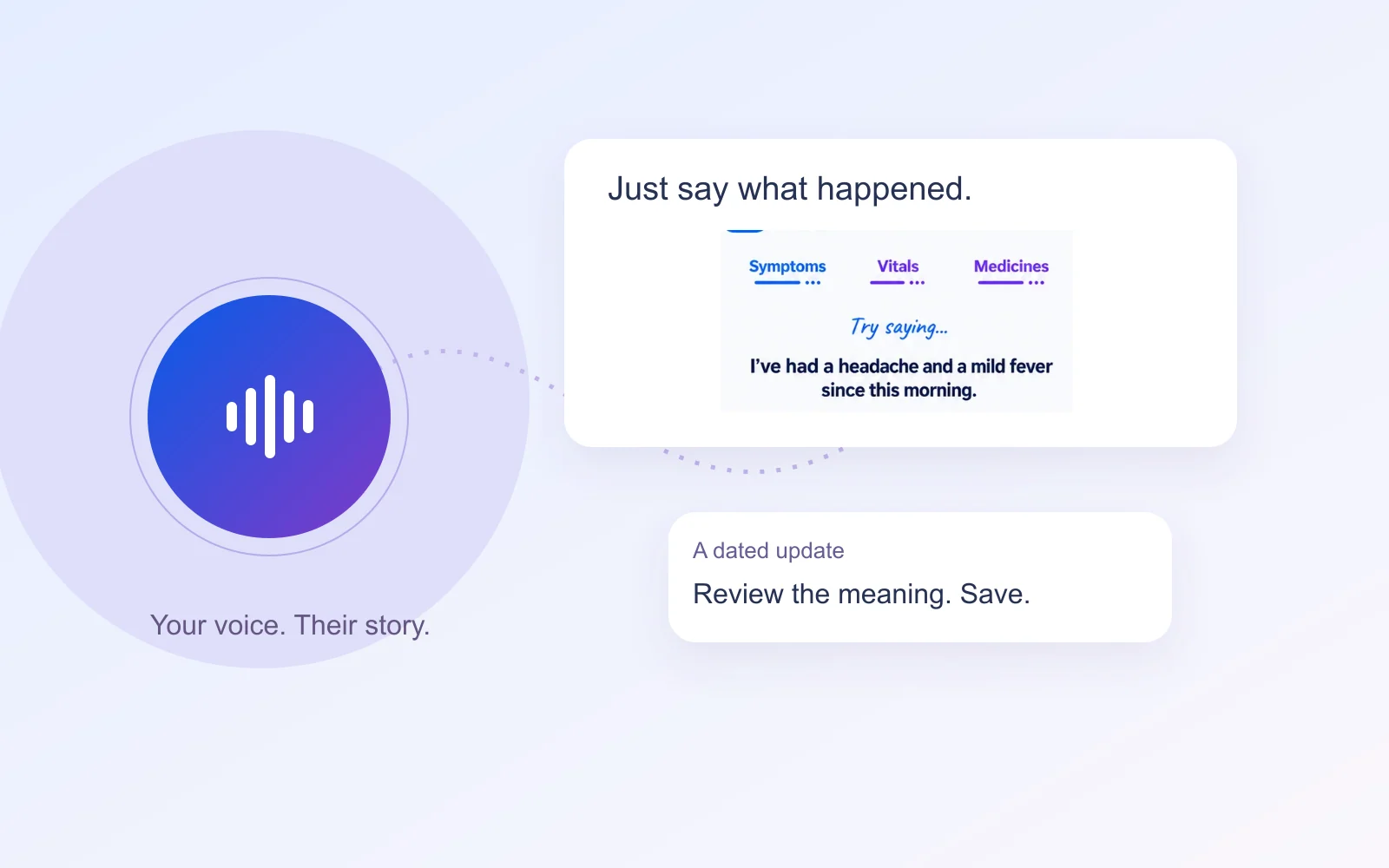
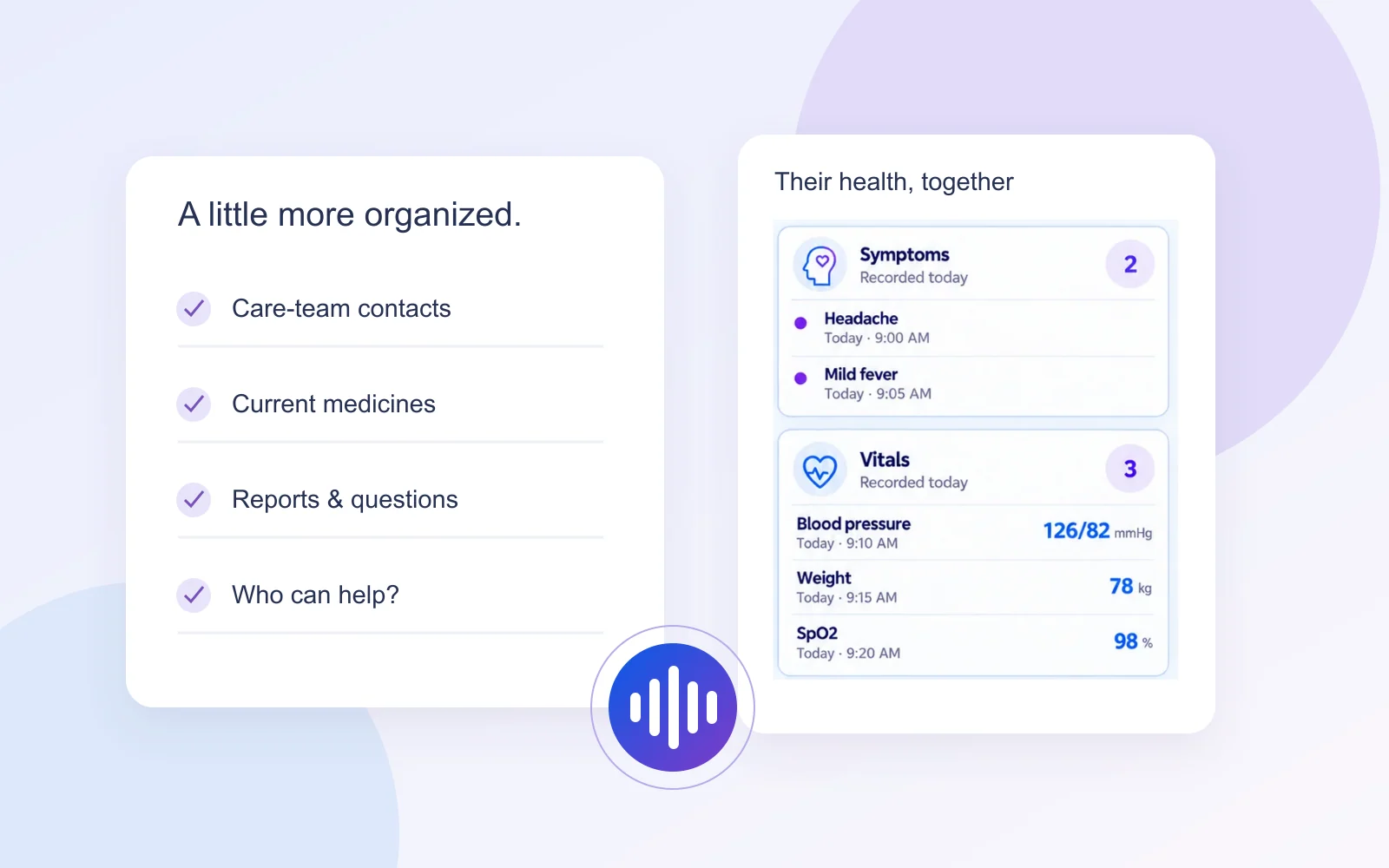
In Curex360, family health records can bring symptoms, vitals and reports into the selected person’s profile. Use a managed profile you own or a shared profile that has granted full access. Check the profile name before recording, and review Voice AI’s interpretation before saving.
For an upcoming visit, prepare a consultation HealthBook with the main concerns and a short timeline. Keep the original report or instruction available so the doctor can check the source.
Common questions
What should a new family caregiver organize first?
Start with the person’s preferences, a current medication list, care-team contacts, upcoming appointments and the most immediate daily needs. Assign a backup for essential tasks.
Can I use this checklist if my parent lives in another state?
Yes. Add a nearby trusted contact and divide tasks into those that need someone present and those you can handle remotely. Use the long-distance caregiving guide for a more detailed plan.
Sources & further reading
Educational guidance from Curex360. Medical concerns and medication decisions belong with a qualified healthcare professional.
- NIH MedlinePlus Magazine · Caregiving 101
- National Institute on Aging · Caregiver worksheets
- MedlinePlus · Caregiving: medication management
Sources checked November 3, 2026. External organizations do not endorse Curex360.